
Haringey had 818 empty council and temporary homes on 11 September. Standard relets took 301 days on average in March; the new target is 46 days.
Haringey Council had 818 homes standing empty between tenancies on 11 September. On 31 March, a standard empty council home took an average of 301 days to let again. The council now aims to cut that to 46 days.
The figures are in a report to the Housing, Planning and Development Scrutiny Panel, which meets on Tuesday 13 October. The report is by the council’s Director of Housing, Kristian Melgaard. It is for information: councillors will question officers on it, but there is no decision to take.
How many homes are empty
The council calls an empty home between tenancies a “void”. The voids report gives two snapshots.
| 31 March 2026 | 11 September 2026 | |
|---|---|---|
| Empty homes being turned round | 724 | 692 |
| Long-term or unavailable | 147 | 126 |
| Total | 871 | 818 |
That is 53 fewer than in March. The report says the fall came even though 330 more homes fell empty between 1 April and 11 September, through ordinary moves and ended tenancies.
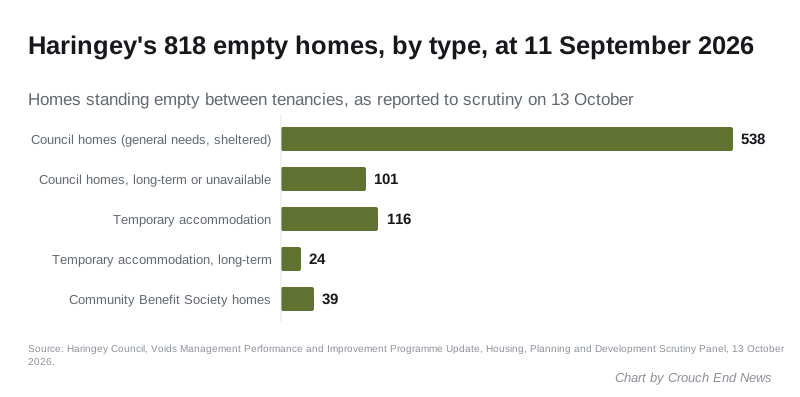
The September figure breaks down like this:
- 538 council homes for general needs and sheltered housing
- 101 council homes that are long-term empty or unavailable
- 116 homes used as temporary accommodation, including leased homes and hostels
- 24 temporary accommodation homes that are long-term empty
- 39 homes owned by Haringey Community Benefit Society, which houses homeless households
What it costs
Empty homes earn no rent. The report puts the lost rent so far this year at £4.029 million, out of £54.967 million in total rental income. That is 7.33%. For the whole of 2025/26 the figure was 6.84%.
The council’s target is to cut the loss by an estimated £3.15 million a year.
Why it got this bad
The council reviewed how it handles empty homes during 2025/26. The report says no single team or contractor was to blame. It lists the problems that built up over time:
- different processes for different kinds of housing
- nobody owning the whole journey from one tenant to the next
- poor data and limited reporting
- duplicated work and too many hand-offs between departments
- not enough capacity at key stages
- a growing backlog of long-term empty homes that need major work before anyone can live in them
A check of the data in June 2026 also found and corrected “historic reporting inconsistencies”.
What the council says it will do
The Strategic Voids Improvement Programme started in February 2026. Its targets for the next 12 months, as set out in the report:
- let around 1,050 empty homes, while about 700 more fall empty
- bring the total down by about 350, from 818 to around 468, by September 2027
- cut the average time to relet a standard home from 301 days to 46 days
- return at least 400 of the long-term empty homes by September 2027, under a separate scheme called Project 400
Contractors for Project 400 have been appointed and surveys have started, the report says. The council’s own repairs service has a target of 43 empty homes finished a month. That would be about 300 between September 2026 and March 2027.
A second paper for the same meeting, an overview of empty homes, explains why the work is growing. About 550 homes fell empty in 2025/26. The council expects about 700 in 2026/27. The paper puts that down to tenants returning to the rebuilt Broadwater Farm estate (it writes “BWF regen”), new builds and homes the council has bought.
What it means for you
If you are on Haringey’s housing register, or living in temporary accommodation, the speed of relets decides how long you wait. The report estimates the programme would mean about 210 more lettings to households in temporary accommodation. The council’s lettings plan for 2026/27 forecasts about 550 households moving from temporary accommodation into long-term homes.
If you are a council tenant with an empty home next door, the council’s own figures now say how long it may stay that way. You can report a problem with an empty property to Haringey’s housing service.
The panel meets at 6.30pm on Tuesday 13 October at George Meehan House, 294 High Road, Wood Green, N22 8JZ. The public can attend. Requests to make a deputation or ask a question are made under the council’s constitution; the clerk is named on the meeting page.
The same meeting also covers the council’s first-quarter finances and a resident panel’s review of how the council engages tenants. Our guide to the week’s council meetings has the rest.
Sources
- Voids Management Performance and Improvement Programme Update, Haringey Council report to the Housing, Planning and Development Scrutiny Panel, 13 October 2026: every count, cost and target above.
- Overview of Empty Homes, presentation to the same meeting: the 550 and 700 annual figures and the reasons for the rise.
- Meeting page and agenda, Haringey Council: time, venue and agenda items.
Have your say