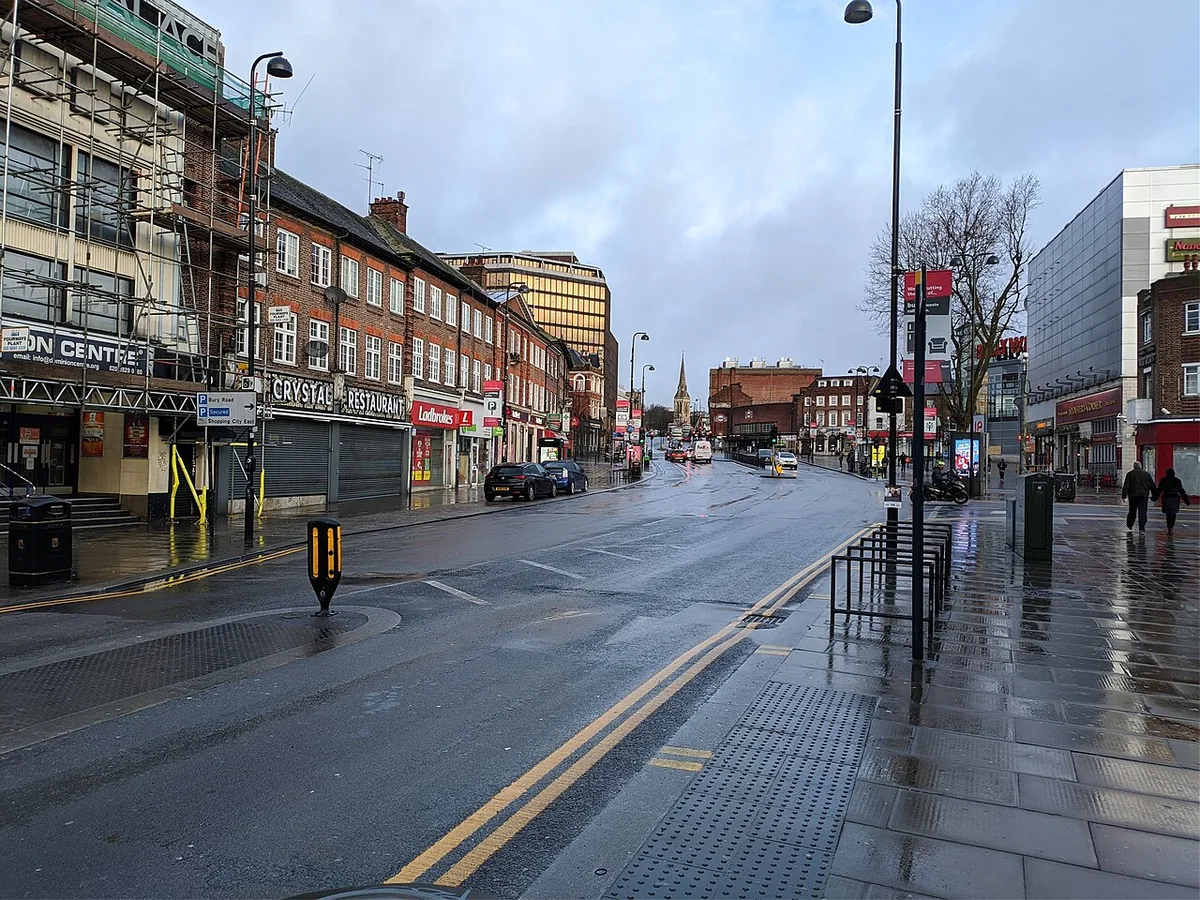

Haringey's draft Local Plan gives Crouch End at least 250 new homes against 4,500 in Wood Green. The six named sites here, what each is meant to hold, and when.
Haringey is writing a new Local Plan, the document that decides what can be built where for the next fifteen years. The draft went out for consultation between 10 October and 19 December 2025, and the council says over 10,000 individuals and groups responded. The next version, the one the council actually intends to adopt, is due out for consultation in the second half of 2026.
For anyone in N8, the draft answers a question people here ask constantly and usually get told is unknowable: how much building is actually coming to Crouch End? The answer is in the plan, in a numbered table, and it is at least 250 homes over the whole plan period, spread across six named sites.
The plan the borough is still running on expires this year
The document currently in force is Haringey’s Local Plan: Strategic Policies, adopted in 2013 with alterations adopted on 24 July 2017, and it sets out how the borough should develop by 2026. That is this year. Its affordable housing target is written as “40% of net new dwellings over the plan period to 2026”.
The replacement is not adopted. The council’s own Local Development Scheme, published in March 2025, programmed the draft consultation for July to September 2025, the Regulation 19 stage for May to June 2026, examination from July to November 2026 and adoption in February 2027. Every one of those dates has already moved: the draft consultation ran in October to December instead, and the Regulation 19 consultation is now described as “the second half of 2026”. The council’s September 2025 Cabinet report acknowledged the slip and said the timetable “will be updated at a later point”. No revised adoption date has been published.
The practical effect is that decisions in Crouch End are being taken against policies written for a period that ends in 2026, while the plan for 2027 to 2042 is still being argued over.
The borough number: 15,920 homes by 2036
Draft policy SS1 says: “Provision will be made for at least 15,920 homes (net) new homes by 2036”, with “a strategic aim of delivering at least 50% as genuinely affordable”, supported by the council’s programme to build 3,000 new council homes.
That 15,920 is the current London Plan target of 1,592 homes a year carried forward. It is likely to go up. The council’s own report notes that the Mayor has started work on a new London Plan and that “it is expected that Haringey’s future housing target will be higher than the current target of 1,592 homes per year having regard to the Government increasing by 33% the housing target for London as a whole”.
Haringey has not been meeting the target it already has. Its Authority Monitoring Report for 2020 to 2024 records a cumulative shortfall of 4,574 homes against the target for 2011 to 2024. In 2023/24 the borough delivered 1,232 net homes against a target of 1,592.
Delivery has improved sharply all the same. The government’s Housing Delivery Test measures homes built against homes required over a rolling three years, and Haringey’s score has gone from 48% in 2018 to 99% in both 2022 and 2023. At 99% the borough is above the 95% threshold, so it is not currently subject to any consequences: no 20% land supply buffer, no presumption in favour of sustainable development. In 2020, when it scored 60%, all three applied.
Where the 15,920 homes are meant to go
The draft plan divides Haringey into eleven neighbourhoods and gives each a figure. Read them together and the geography of the borough’s growth is not subtle.
| Neighbourhood | Policy | At least |
|---|---|---|
| Wood Green | WGN1 | 4,500 homes |
| North Tottenham | NTN1 | 4,000 homes |
| Tottenham Hale | THN1 | 2,500 homes |
| Green Lanes | GLN1 | 2,500 homes |
| Seven Sisters and South Tottenham | SSN1 | 1,200 homes |
| Bruce Grove | BGN1 | 400 homes |
| Highgate | HGN1 | 400 homes |
| Stroud Green | SGN1 | 350 homes |
| Crouch End | CEN1 | 250 homes |
| Hornsey | HYN1 | 250 homes |
| Muswell Hill | MHN1 | 250 homes |
Wood Green and the four Tottenham neighbourhoods account for 12,600 homes, about three quarters of the total. The five western neighbourhoods that most readers of this site live in, Highgate, Stroud Green, Crouch End, Hornsey and Muswell Hill, account for 1,500 between them, about 9%.
That is deliberate policy rather than accident. The draft plan channels growth into two designated Opportunity Areas: the Wood Green and Haringey Heartlands area, which is to “deliver at least 4,500 new homes and a significant uplift in jobs”, and the Tottenham portion of the Lee Valley Opportunity Area, which is to “deliver at least 7,000 new homes”. Whether you read that as protecting the west or as loading the east depends entirely on which end of the borough you live in, and it is the argument the Regulation 19 consultation later this year will be about.
The six sites in Crouch End
Policy CEN1 puts Crouch End’s development into two Placemaking Focus Areas, Crouch End Town Centre and Park Road, both classed as “Enhance” areas rather than “Transform” ones, meaning incremental change rather than redevelopment. Six sites are named:
| Ref | Site | Homes | Other floorspace | Phasing | Ownership |
|---|---|---|---|---|---|
| CE SA05 | 50 Lynton Road depot and 72-96 Park Road, N8 8SL | 90 | 1,000 sqm Class E | 2027-2041 | Public and private |
| CE SA04 | 93-113 Park Road, N8 8JN | 50 | 200 sqm Class E | 2037-2041 | Public and private |
| CE SA01 | Former telephone exchange, Crouch End Hill, N8 8DH | 40 | 500 sqm Class E | 2032-2036 | Private |
| CE SA03 | 156 Tottenham Lane, N8 8BE | 30 | 250 sqm Class E | 2037-2041 | Private |
| CE SA02 | 138-143 Crouch Hill | 10 | 200 sqm Class E | 2037-2041 | Private |
| CE SA06 | Ramsey Court, Park Road, N8 8JU | 9 | — | 2027-2031 | Public |
| Total | 229 | 2,150 sqm |
Two things follow from that table that are worth saying plainly.
The indicative capacities add up to 229 homes against a neighbourhood requirement of at least 250, so the plan is relying on windfall sites, conversions and extensions to make up the rest. That is not unusual in a built-up conservation area, and Haringey’s monitoring shows it is realistic: 735 of the 4,451 net homes delivered borough-wide between 2020 and 2024, about one in six, came from conversions, extensions and similar rather than from major schemes.
And the phasing is late. Only Ramsey Court, a nine-home council-owned site, is programmed for the first five years. Four of the six sites, carrying 130 of the 229 homes, are not programmed to start until 2037 to 2041, the final five years of a plan that has not been adopted yet. In practice, Crouch End’s named housing sites are a 2030s proposition.
The one substantial scheme: the old telephone exchange
The site most likely to actually move is CE SA01, the former BT telephone exchange on Crouch End Hill, a 0.3 hectare private site between Crouch End Hill and Crouch Hill, next to the locally listed Park Chapel, now a recording studio, and the Railway Tavern.
The draft plan asks for redevelopment providing “new traditional shop frontage with town centre uses along Crouch End Hill with residential above and to the rear of the site”, 40 homes, 500 sqm of commercial floorspace, and, most visibly, a new green public space at the south-east corner behind Park Chapel with a new pedestrian route from Crouch End Hill through to Crouch Hill. It requires a masterplan and early engagement with the neighbouring landowners.
The public route matters more than the home count. The plan’s supporting text says the neighbourhood “has fewer public green spaces than neighbouring areas in the west of Haringey”, and this is the only site allocation in Crouch End that creates any.
What has actually been built here
Ambition and delivery are different things, and the borough’s own monitoring makes the point sharply. Of 3,366 homes completed on 23 major schemes between 2020 and 2024, the Authority Monitoring Report’s summary of what happened in the west of the borough is a single sentence: “the development of the former Coppetts Wood hospital also completed resulting in the finalization of a well-designed new neighbourhood in Fortis Green ward”. That scheme was 77 homes.
Everything else the report highlights is east or centre: Hale Wharf, the 30-storey Hale Village Gateway Tower, the Gessner apartments on Ashley Road, Apex House at Seven Sisters, and the 808 homes at Clarendon Square on the former Wood Green gas works, which alone is more than three times the whole Crouch End allocation for the next fifteen years.
Affordable housing has run well behind the 40% target. Since 2011, new development has delivered 3,083 affordable homes gross, 28.9% of net homes over the same period. Over 2020 to 2024 the figure was 23.5%. The draft plan’s aim of “at least 50% genuinely affordable” would be a doubling of recent performance.
What happens next, and how to have your say
- Second half of 2026: the council publishes the Proposed Submission Local Plan for Regulation 19 consultation. This is the version it intends to adopt, and it is the last chance to comment before an inspector sees it.
- After that: the plan is submitted for independent examination by a planning inspector.
- Then: adoption by the council. The March 2025 timetable said February 2027. That date has been overtaken and no replacement has been published.
- The council’s contact address for the new Local Plan is newlocalplan@haringey.gov.uk.
Two other documents sit alongside it. The Highgate Neighbourhood Plan, adopted in 2017, is part of the statutory development plan in its area. And the new London Plan is being prepared, with a draft due for consultation in 2026, examination through 2026 and 2027 and adoption expected in late 2027. That is the document that will set Haringey’s next housing target, and the one to watch if you want to know whether 1,592 homes a year becomes a considerably larger number.
Frequently asked questions
How many new homes are planned for Crouch End?
At least 250 over the plan period, under draft policy CEN1. Six named site allocations account for 229 of them: 90 at the Lynton Road depot and Park Road, 50 at 93-113 Park Road, 40 at the former telephone exchange on Crouch End Hill, 30 at 156 Tottenham Lane, 10 at 138-143 Crouch Hill and 9 at Ramsey Court.
What is Haringey’s housing target?
1,592 homes a year, set by the London Plan 2021, which the draft Local Plan carries forward as “at least 15,920 homes (net) new homes by 2036”. The council expects the figure to rise when the new London Plan lands, because the government has increased London’s overall target by 33%.
Is Haringey meeting its housing target?
Not cumulatively. The borough is 4,574 homes short against its targets for 2011 to 2024, and delivered 1,232 net homes in 2023/24 against 1,592. But its Housing Delivery Test score has risen from 48% in 2018 to 99% in 2023, which is above the 95% threshold, so no planning sanctions currently apply.
Does Haringey have an up-to-date Local Plan?
No. The adopted Strategic Policies were adopted in 2013 with alterations in July 2017 and set out how the borough should develop by 2026. The replacement plan is at draft stage, with the Regulation 19 consultation due in the second half of 2026.
What is happening to the old telephone exchange on Crouch End Hill?
It is site allocation CE SA01 in the draft Local Plan, earmarked for 40 homes, 500 sqm of town centre floorspace, a new shopping frontage on Crouch End Hill and a new public green space behind Park Chapel. It is privately owned and phased for 2032 to 2036. There is no current planning permission for that scheme.
Where can I see Haringey planning applications?
On the council’s public register at publicregister.haringey.gov.uk, which is searchable by address and application reference.
Related
- Crouch End house prices: why only 48 of 2,066 sales in the borough last year were new builds, and what that thin pipeline does to prices.
- Crouch End trains to London: the draft plan notes the neighbourhood “does not have an underground station”, which is why every site allocation here scores a middling PTAL of 3 or 3 to 4 for public transport access.
- Crouch End roadworks and travel.
Sources
- Haringey Draft Local Plan Part 1: Placemaking for Haringey (October 2025) for policy SS1, the 15,920 homes figure, the 50% affordable aim and the Opportunity Area totals.
- Haringey Draft Local Plan Part 2: Neighbourhood Policies (October 2025) for policy CEN1, the neighbourhood housing figures and the Crouch End site allocation tables.
- Draft Local Plan consultation page, Haringey Council for the consultation dates, response numbers and next steps.
- Approval to consult on Regulation 18 Draft Local Plan, Cabinet, 16 September 2025 for the Local Development Scheme timetable, the 1,592 target and the new London Plan programme.
- Haringey Authority Monitoring Report 2020-2024 (April 2025) for completions, the cumulative shortfall, Housing Delivery Test results, the major scheme table and the affordable housing percentages.
- Local Plan: Strategic Policies, Haringey Council for the adopted plan’s dates and period.
The draft Local Plan has not been examined or adopted. Site allocations, capacities and phasing can all change before it does.
Have your say