
A tribunal ordered a Muswell Hill landlord to repay 90% of a year's rent, £7,884.84, over an unlicensed shared house. How to check your own home and claim.
A former tenant of a shared flat in Muswell Hill has won £7,884.84 of her rent back, because the property should have been licensed and was not.
The First-tier Tribunal made the rent repayment order against her former landlord and told him to pay it within 28 days, along with £341 of her application and hearing fees. That is £8,225.84 in total. The case is LON/00AP/HMF/2025/0802, heard by Judge Shepherd and Fiona Macleod MCIEH, and decided on 5 February 2026. Haringey Council publicised it on 26 August.
The detail worth knowing is who brought it. The council did not. The tenant applied herself, represented by the campaign group Justice for Tenants. The landlord did not attend the hearing and did not respond to the allegations. Any renter in the borough can do the same thing.
What the tribunal found
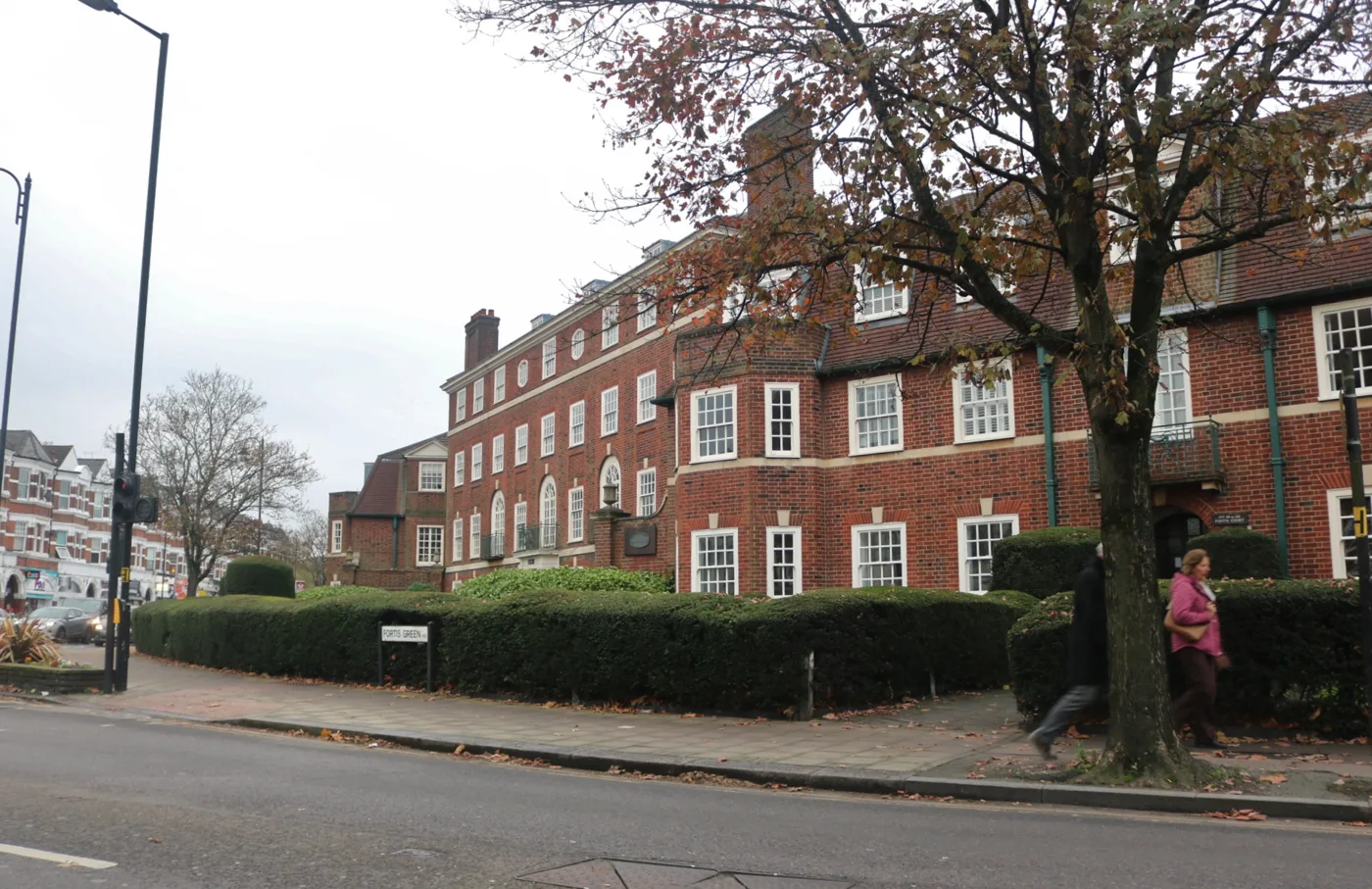
The property is a two-storey terraced house on Leaside Avenue, off Fortis Green, split into a ground-floor flat and a first-floor flat. The tenant lived in the first-floor flat from 26 May 2023 to 25 May 2024, sharing three bedrooms, one bathroom, a small kitchen and a small dining area with two people she was not related to.
Three people from more than one household made it a house in multiple occupation. It sat inside Haringey’s additional licensing scheme, which ran from 27 May 2019 to 26 May 2024. There was no licence.
The tenant also gave evidence about the condition of the flat. The tribunal recorded:
- a ceiling collapse in the flat below, after which she avoided using the bathroom until it was resolved
- substantial mould growth in the communal hallway, indicating dry rot
- bedroom doors that would not close, let alone lock
- no fire doors and no smoke detectors
- a kitchen sink blocked for much of the tenancy, and no kitchen door
- pipework that shrieked, and was left exposed after a repair
The tribunal called the offence “very serious”, noting that she was “potentially placed at risk” by the absence of a licence. It added: “It is hard to fathom how the Respondent could let the premises in the state it was in during the relevant period.”
It also recorded that the same landlord had already been subject to a rent repayment order at a different property, in case LON/00AP/HMF/2024/0652, and that there is “clearly a risk that he will be subject to a Banning order in the future”.
How the tribunal reached £7,884.84
Rent repayment orders follow a set method, from the Upper Tribunal decision in Acheampong v Roman. The tribunal starts with the rent, strips out anything that was really payment for something else, then decides what share of the rest reflects how badly the landlord behaved.
The 90% matters. The Upper Tribunal has set out a rough scale for these awards: the professional rogue landlord at the higher end, around 80%, and the landlord who simply failed to inform himself of the rules at the lower end, around 25%. This award sits above the top of that band.
The landlord can ask for permission to appeal to the Upper Tribunal (Lands Chamber). The application has to be made in writing to the First-tier Tribunal office that dealt with the case.
What the council said
Cllr Tammy Hymas, Cabinet Member for Housing and Co Deputy Leader, said the case “sends a clear message to landlords: if you’re breaking the law, we’re coming after you.”
The council can act on its own account too. Its HMO licensing pages set out an unlimited fine on conviction and a civil penalty of up to £30,000. Its civil penalty policy, revised in March 2025, starts at £17,500 for an unlicensed HMO and £22,500 for failing to comply with an improvement notice.
None of that puts money in a tenant’s pocket. A rent repayment order does.
What it means for you
First, work out whether your home needs a licence.
- Every HMO in Haringey now needs one. The council’s own wording is that “all property rented as an HMO in the borough now requires a licence to legally be let”. An HMO is broadly a property where people from more than one household share a kitchen, bathroom or toilet.
- Five or more occupants from two or more households is a mandatory licence. Smaller shared houses are covered by the borough-wide additional scheme.
- Fourteen wards also have selective licensing, which covers ordinary single household lets: Bounds Green, Bruce Castle, Harringay, Hermitage and Gardens, Noel Park, Northumberland Park, Seven Sisters, South Tottenham, St Ann’s, Tottenham Central, Tottenham Hale, West Green, White Hart Lane and Woodside. Crouch End, Muswell Hill, Highgate and Hornsey are not on that list, so here it is the HMO rules that bite.
Then check the register. Haringey publishes a public register of licensed properties. It updates as final licences are issued, so a pending application will not show. An unlicensed property can be reported to the council, which warns that its officers cannot enter without a tenant inviting them in.
If it should have been licensed and was not, you can apply yourself. The limits, from the Housing and Planning Act 2016:
- the maximum is the rent you paid over a 12-month period during which the offence was being committed
- any universal credit paid towards your rent is deducted
- so is anything in the rent that covered utilities the landlord paid for
- you do not need the council to prosecute first, and you do not need the landlord to attend
Renters in the borough have a new route to raise this kind of thing collectively: the council’s private renters’ forum held its first meeting on 2 September at George Meehan House in Wood Green.
Sources: First-tier Tribunal (Property Chamber), decision in LON/00AP/HMF/2025/0802, 5 February 2026; Haringey Council, news release, 26 August 2026; Haringey Council property licensing pages.
Have your say